Curd for Hair Growth: Benefits, How to Apply & DIY Hair Mask Recipes

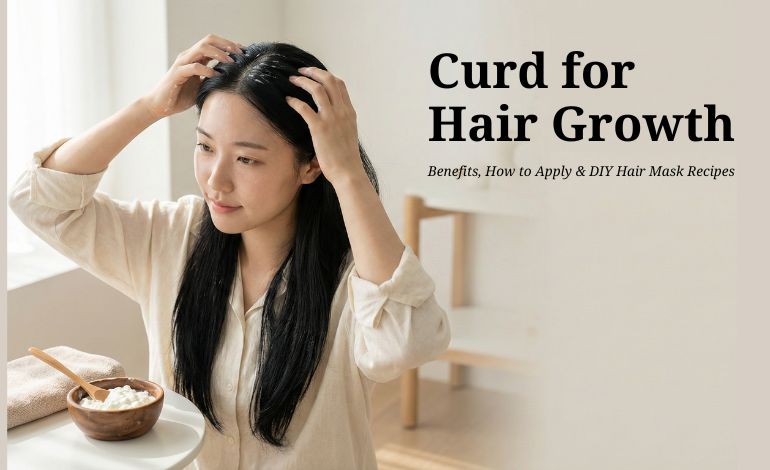
Hair problems like hair fall, thinning, dryness, dandruff, and slow growth are common concerns for many people today. Stress, pollution, poor diet, harsh styling, and chemical treatments often weaken hair roots and reduce scalp health. Fortunately, simple natural remedies can help strengthen your hair and improve growth — and one of the most effective is curd (yogurt).
In this blog, we’ll explore the benefits of curd for hair, how to use it properly, and easy DIY hair mask recipes for visible results.
Why Curd Helps Hair Growth
Curd isn’t just a kitchen staple – it’s a nutrient-rich ingredient that can benefit your hair in multiple ways:
1. Deep Conditioning
Curd contains natural fats and proteins that nourish dry, brittle hair and make it softer and more manageable.
2. Strengthens Hair Roots
The protein in curd helps repair damaged hair and strengthens roots, which reduces hair fall.
3. Promotes Scalp Health
Lactic acid in curd gently exfoliates the scalp, removing dead skin and reducing dandruff – a common cause of hair thinning.
4. Improves Blood Circulation
When massaged into the scalp, curd helps improve nourishment delivery to hair follicles, supporting healthy hair growth.
5. Reduces Frizz and Breakage
Moisturizing properties of curd help seal the hair cuticle, reducing frizz and split ends.
Who Can Benefit from Using Curd for Hair?
Curd is suitable for people with:
- Excessive hair fall
- Dry or frizzy hair
- Slow hair growth
- Dandruff or itchy scalp
- Chemically damaged hair
Note: If you have a sensitive scalp or dairy allergy, test a small amount first or consult a dermatologist.
How to Apply Curd for Hair Growth
Follow these steps for best results:
Step-by-Step Application
- Use Fresh Curd
Choose plain, unsweetened curd at room temperature. - Section Your Hair
Divide hair into small sections for even application. - Apply from Scalp to Ends
Use fingertips to apply the curd mask on the scalp and along the hair shaft. - Massage Gently
Spend 5–7 minutes massaging your scalp to improve blood circulation. - Leave It On
Let the mask sit for 30–45 minutes. - Rinse With Mild Shampoo
Wash gently with lukewarm water and a mild shampoo. - Repeat Weekly
For noticeable results, use 1–2 times a week.
DIY Curd Hair Mask Recipes
Here are proven hair masks using curd and simple kitchen ingredients:
Curd & Aloe Vera Hair Mask (Best for Hair Growth & Scalp Health)
Ingredients:
- ½ cup curd
- 2 tablespoons aloe vera gel
How to Use:
Mix and apply on scalp & hair. Leave for 40 minutes. Rinse.
Benefits:
Aloe vera soothes scalp irritation and supports new growth.
Curd + Fenugreek (Methi) Hair Mask (Reduces Hair Fall)
Ingredients:
- ½ cup curd
- 2 tablespoons soaked fenugreek seeds (grind into paste)
How to Use:
Blend and apply from root to tip. Wait 45 minutes then wash.
Benefits:
Fenugreek strengthens hair roots and reduces breakage.
Curd + Egg Yolk Hair Mask (Protein Boost)
Ingredients:
- ½ cup curd
- 1 egg yolk
How to Use:
Mix well and apply. Rinse after 30 minutes.
Benefits:
Egg yolk adds extra protein for strong, healthy hair.
Curd + Lemon + Honey Mask (Dandruff Control + Shine)
Ingredients:
- ½ cup curd
- 1 tbsp honey
- 1 tbsp lemon juice
How to Use:
Blend, apply, and rinse after 30–40 minutes.
Benefits:
Honey moisturizes while lemon helps cleanse dandruff.
Tips for Best Results
✔ Always use plain fresh curd
✔ Avoid harsh shampoos after application
✔ Stay hydrated and maintain a balanced diet
✔ Avoid too much heat styling
✔ Be consistent — results improve within 4–8 weeks
Precautions
Do not use curd if you are allergic to dairy
Avoid scalp scratching when applying
If irritation occurs, wash immediately
Sensitive scalps may benefit from a patch test first
Final Thoughts
Curd is a cost-effective, natural treatment that nourishes your hair from root to tip. With regular use and the right hair mask recipes, you can reduce hair fall, nourish dry strands, and support stronger hair growth naturally.
If your hair problems persist even after home care, consider consulting a dermatologist or trichologist for more personalized treatment.