
Chaitra Navratri 2026 Complete Guide: Dates, Puja Timings, Vrat Rules & Rituals

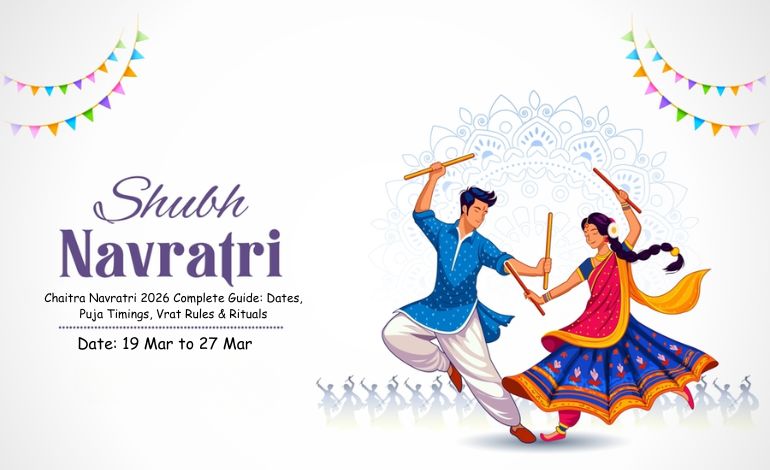
As winter slowly releases its quiet hold and the fragrance of spring begins to fill the air, the spiritual calendar opens one of the most powerful gateways of the year — Chaitra Navratri.
Chaitra Navratri 2026 is not merely a festival marked by rituals and fasting. It is a sacred nine-day journey into the transformative power of Shakti, the cosmic feminine energy that sustains creation.
These nine nights invite devotees to step away from the noise of everyday life and enter a deeper state of reflection, devotion, and renewal. Many traditions consider this period the true beginning of the Hindu New Year, symbolizing rebirth, fresh intentions, and spiritual clarity.
The essence of Navratri lies in a timeless truth:
light ultimately triumphs over darkness, wisdom prevails over ignorance, and faith conquers fear.
Through prayers, fasting, and meditation, devotees seek the blessings of Maa Durga in her nine divine forms — the Navdurga — each representing a stage of spiritual awakening.
Whether you observe every ritual with devotion or simply wish to understand the deeper meaning of the festival, Chaitra Navratri 2026 offers a powerful opportunity to reconnect with inner strength and divine grace.
Chaitra Navratri 2026: Important Dates & Muhurat
According to the Hindu lunisolar calendar, Chaitra Navratri begins on the Pratipada Tithi of the Chaitra month.
In 2026, the festival will be observed during the third week of March.
Key Festival Dates
| Event | Date |
|---|---|
| Chaitra Navratri Begins | March 19, 2026 |
| Ghatasthapana / Kalash Sthapana | March 19, 2026 |
| Durga Ashtami | March 26, 2026 |
| Ram Navami | March 27, 2026 |
Kalash Sthapana Muhurat
| Muhurat | Timing |
|---|---|
| Primary Muhurat | 06:52 AM – 10:10 AM |
| Abhijit Muhurat | 11:47 AM – 12:36 PM |
Performing Ghatasthapana during these auspicious timings is believed to harmonize the ritual with cosmic energies.
The Spiritual Meaning of Chaitra Navratri
Chaitra Navratri occurs during the Vasant (spring) season, which is why it is also called Vasanta Navratri.
Spring represents renewal and transformation in nature — trees bloom, seeds awaken, and life begins anew. Spiritually, Navratri symbolizes the same process within the human soul.
In Vedic philosophy, these nine days represent a gradual elevation of consciousness.
The journey begins with grounding and discipline and ends with spiritual fulfillment and wisdom.
Chaitra Navratri also has a profound connection with the Ramayana. The ninth day of the festival celebrates Ram Navami, the birth of Lord Rama — the embodiment of Dharma (righteousness).
Thus, the festival unites two powerful spiritual currents:
• the worship of Shakti (Divine Mother)
• the celebration of Dharma through Lord Rama
Together, they symbolize the balance of strength and wisdom.
Ghatasthapana 2026: The Sacred Beginning of Navratri
The festival begins with Ghatasthapana, also known as Kalash Sthapana.
This ritual represents inviting the divine energy of Maa Durga into the home.
The Kalash itself symbolizes the universe — its water represents life, the coconut symbolizes consciousness, and the leaves represent nature’s vitality.
Step-by-Step Puja Vidhi
1. Prepare the Sacred Space
Choose a clean, quiet area of your home. Place a wooden platform covered with a red cloth.
2. Sow Barley Seeds
Fill an earthen pot with soil and sow barley seeds (Jau).
These sprouts symbolize growth, prosperity, and fertility.
3. Prepare the Kalash
Fill a copper or clay pot with clean water.
Add betel nut, coins, rice grains, and a few drops of Ganga water.
4. Place Mango Leaves
Arrange five or seven mango leaves around the mouth of the Kalash.
5. Place the Coconut
Wrap a coconut in red cloth and place it on top of the Kalash.
6. Invoke Maa Durga
With folded hands, chant prayers inviting the Goddess to reside in the Kalash.
Many devotees also light an Akhand Jyoti (eternal lamp) which remains lit throughout the nine days.
The 9 Days of Navdurga: Spiritual Meaning of Each Day
Each day of Navratri is dedicated to a unique form of Maa Durga.
| Day | Goddess | Spiritual Meaning |
|---|---|---|
| Day 1 | Shailputri | Strength and grounding |
| Day 2 | Brahmacharini | Discipline and devotion |
| Day 3 | Chandraghanta | Courage and protection |
| Day 4 | Kushmanda | Creation and vitality |
| Day 5 | Skandamata | Motherly compassion |
| Day 6 | Katyayani | Warrior energy |
| Day 7 | Kalaratri | Destruction of negativity |
| Day 8 | Mahagauri | Purity and forgiveness |
| Day 9 | Siddhidatri | Spiritual fulfillment |
By honoring each form, devotees symbolically move through different stages of spiritual evolution.
Navratri Fasting Rules (Vrat Guidelines)
Fasting during Navratri is considered a powerful practice for both physical purification and spiritual discipline.
The purpose of fasting is not deprivation but detachment from material indulgence.
Foods to Avoid
During Navratri, devotees avoid:
• Wheat and rice
• Pulses and lentils
• Onion and garlic
• Non-vegetarian food
• Alcohol and processed foods
Foods Allowed During Vrat
Instead, devotees eat light satvik foods, such as:
• Fruits and dry fruits
• Sabudana (tapioca pearls)
• Samak rice (barnyard millet)
• Kuttu flour (buckwheat)
• Singhara flour (water chestnut)
• Milk, yogurt, and paneer
• Potatoes and sweet potatoes
Only Sendha Namak (rock salt) is used during fasting.
These foods keep the body energized while maintaining spiritual purity.
Kanya Puja: Honoring the Living Goddess
One of the most meaningful rituals of Navratri is Kanya Puja, usually performed on Ashtami or Navami.
Nine young girls are invited into the home and worshipped as living representations of the Navdurga.
Devotees wash their feet, apply tilak on their forehead, and offer them a traditional meal of:
• Puri
• Kala chana
• Halwa
This ritual reminds devotees that divine energy resides within every being.
The Power of Mantras and Meditation During Navratri
Navratri is considered a highly charged spiritual period.
Mantra chanting during these days is believed to amplify positive vibrations.
Common mantras include:
Om Dum Durgaye Namah
Ya Devi Sarva Bhuteshu Shakti Rupena Samsthita
Many devotees also chant the Hare Krishna Maha Mantra to cultivate inner peace.
Meditation during Navratri helps balance the mind and deepen spiritual awareness.
Frequently Asked Questions
When is Chaitra Navratri 2026?
Chaitra Navratri 2026 begins on March 19 and ends on March 27 with Ram Navami.
What is the best time for Kalash Sthapana?
The most auspicious Muhurat is 06:52 AM – 10:10 AM on March 19, 2026.
Can salt be eaten during Navratri fast?
Yes, but only Sendha Namak (rock salt) is allowed.
Why are there nine days of Navratri?
The nine days represent the worship of nine forms of Goddess Durga, symbolizing stages of spiritual growth.
Conclusion
Chaitra Navratri 2026 is a sacred period that invites us to pause, purify, and reconnect with the divine rhythm of life.
Through fasting, prayer, meditation, and devotion, these nine nights become a journey from outer ritual to inner transformation.
As the festival concludes with Ram Navami, devotees emerge renewed — carrying the blessings of Maa Durga and the wisdom of Lord Rama into the year ahead.
May this Navratri fill your life with strength, prosperity, and divine grace.
Also Explore : Why Moringa Powder Is a Superfood: Benefits, Uses, and Daily Tips