Almonds vs Cashews: Calories, Protein, and Health Differences Explained

Nuts are widely recognized as nutrient-dense foods that support heart health, metabolic function, and satiety. Among the most popular choices are Almond and Cashew. While both are commonly grouped together as healthy snacks, their nutritional profiles and physiological effects differ in meaningful ways.
This article provides a clear, evidence-based comparison of almonds and cashews, focusing on calories, protein, micronutrients, and health implications.
Botanical and Structural Differences
Although both are referred to as “nuts,” almonds are technically seeds of the almond tree, while cashews are seeds attached to the cashew apple. This botanical distinction contributes to differences in fat composition and micronutrient density.
Calorie Comparison
Caloric density is similar but not identical.
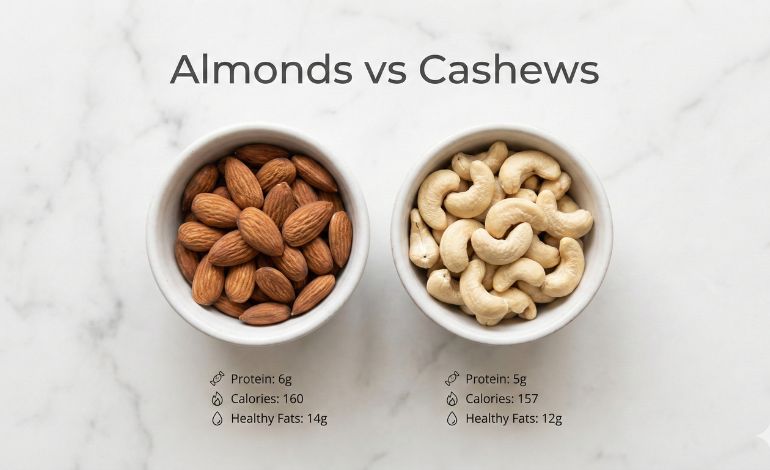
Per 28 grams (1 ounce):
| Nutrient | Almonds | Cashews |
|---|---|---|
| Calories | ~164 kcal | ~157 kcal |
| Total Fat | 14 g | 12 g |
| Carbohydrates | 6 g | 9 g |
| Protein | 6 g | 5 g |
Key takeaway: Almonds are slightly higher in calories and fat, while cashews contain more carbohydrates.
The difference is modest, so portion control is more important than nut selection for calorie management.
Protein Content
Protein plays a central role in muscle repair, satiety, and metabolic regulation.
- Almonds: ~6 grams per ounce
- Cashews: ~5 grams per ounce
Almonds provide slightly more protein, making them marginally better for individuals focused on muscle maintenance, weight loss, or higher protein intake.
However, neither nut qualifies as a high-protein food compared to legumes or animal sources.
Fat Composition
Fat quality matters more than fat quantity.
Almonds
- Higher in monounsaturated fats
- Rich in oleic acid (heart-supportive fat also found in olive oil)
Cashews
- Contain both monounsaturated and polyunsaturated fats
- Slightly lower total fat overall
Both nuts are low in saturated fat compared to many processed snack foods. Almonds have a slight advantage for cardiovascular support due to their higher monounsaturated fat concentration.
Micronutrient Differences
This is where distinctions become more significant.
Almonds Are Higher In:
- Vitamin E (strong antioxidant)
- Calcium
- Fiber
- Magnesium
Vitamin E is particularly notable; almonds are one of the richest natural sources.
Cashews Are Higher In:
- Iron
- Zinc
- Copper
Cashews stand out for copper content, which supports red blood cell production and immune function.
Fiber Content
Fiber influences digestive health, blood sugar control, and satiety.
- Almonds: ~3.5 grams per ounce
- Cashews: ~1 gram per ounce
Almonds contain significantly more fiber, making them more beneficial for:
- Weight management
- Gut health
- Blood glucose stabilization
For individuals managing insulin resistance or diabetes risk, almonds typically provide superior metabolic benefits.
Blood Sugar Impact
Due to lower carbohydrate and higher fiber content, almonds have a lower glycemic impact.
Cashews contain slightly more carbohydrates and less fiber, which may cause a marginally greater glucose response. However, both remain low-glycemic foods when consumed in moderate portions.
Heart Health Considerations
Both nuts support cardiovascular health, but through slightly different mechanisms:
- Almonds improve LDL cholesterol levels and provide antioxidant protection.
- Cashews supply plant sterols and essential minerals like magnesium and copper.
Research generally favors almonds for cholesterol reduction, though cashews also contribute positively when replacing refined snacks.
Weight Management
Despite being calorie-dense, nuts do not strongly promote weight gain when consumed in controlled portions.
Almonds may have an advantage due to:
- Higher fiber
- Slightly higher protein
- Greater satiety effect
Some studies suggest not all almond calories are fully absorbed due to their fibrous structure.
Digestibility and Allergies
Both are common allergens.
Cashews tend to be softer and easier to chew, making them preferable for:
- Children
- Elderly individuals
- People with dental sensitivity
Almond skins contain tannins that may slightly reduce mineral absorption unless soaked or roasted.
Taste and Culinary Use
- Almonds: Mild, slightly sweet, firm texture
- Cashews: Creamy, buttery, softer
Cashews are often used in:
- Vegan cream sauces
- Dairy alternatives
- Asian cuisine
Almonds are common in:
- Baking
- Nut butters
- Snack mixes
- Milk alternatives
Which Should You Choose?
The decision depends on your objective:
Choose almonds if you want:
- Higher fiber
- More protein
- Vitamin E support
- Stronger satiety
Choose cashews if you want:
- More iron and copper
- Creamier texture
- Slightly lower fat content
For overall health, rotating both provides broader micronutrient coverage.
Final Verdict
Almonds and cashews are both nutrient-dense whole foods with distinct advantages. Almonds lead in fiber, protein, and vitamin E, making them slightly more favorable for heart health and weight management. Cashews offer valuable minerals like copper and iron, along with a creamy texture ideal for culinary applications.
Rather than choosing one exclusively, incorporating both in moderate amounts — approximately 28 grams per serving — can support a balanced, nutrient-rich diet.